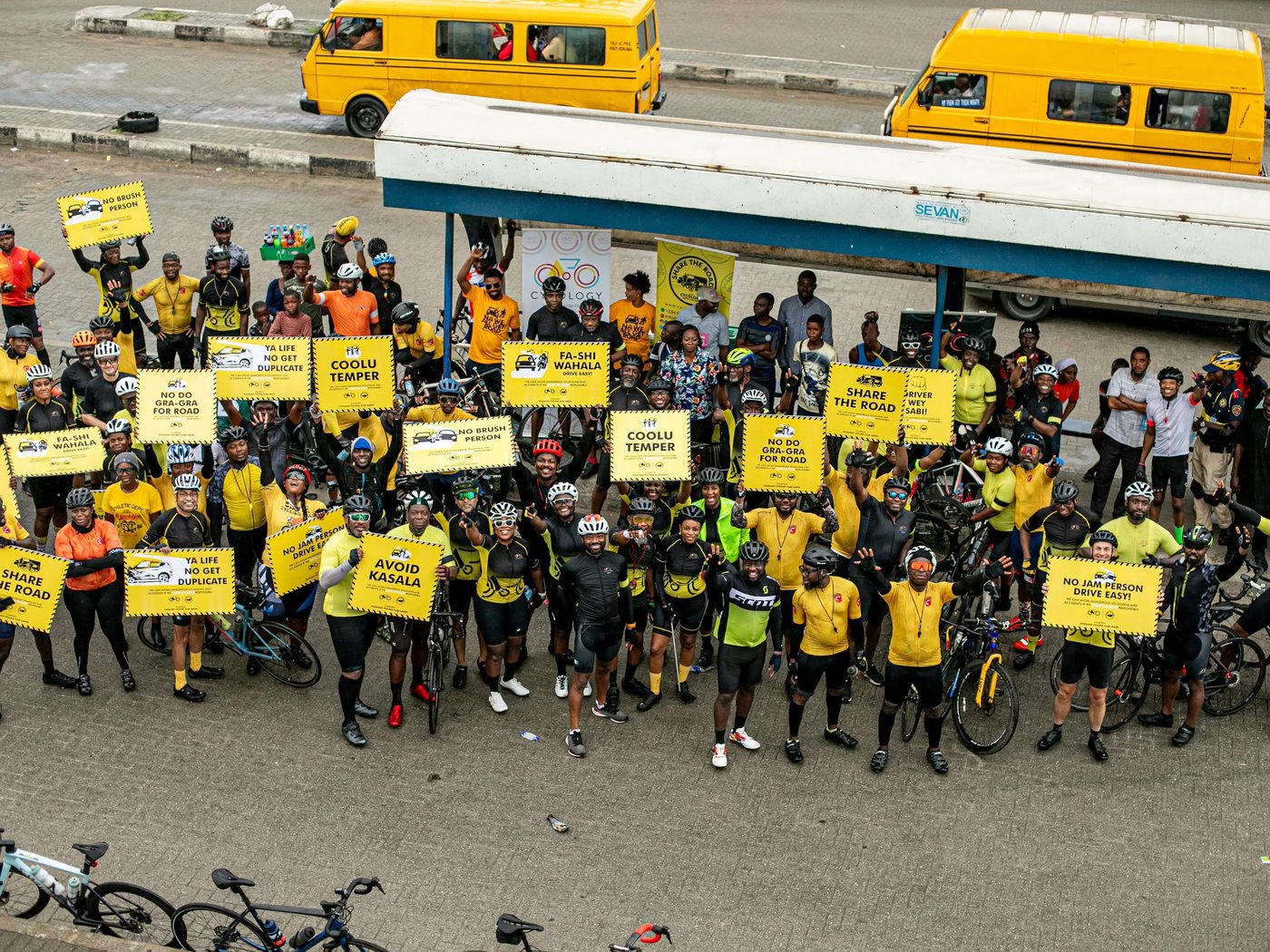
Educate
Educate all road users on their obligation to share the road.
Walking, running and cycling are fast becoming popular activities in Nigeria, for recreation and daily transport. It's imperative our roads be safe for everyone.
In alignment with the Non-Motorised Transport Policy, the THEMES pillars for a “Greater Lagos”, and the Sustainable Development Goals (SDGs) of the UN, the campaign aims to accomplish the following:
Educate all road users on their obligation to share the road.
Reinforce the use of the Highway Code.
Encourage road safety etiquette and courtesy.
Promote walking, running, and cycling awareness, as well as a behavioural shift.
Safety is an integral part of this campaign, so it should be taken seriously. The safety of all road users, including pedestrians and cyclists, must be seen as paramount. The tone of the overall campaign, both in look and feel, would be:
Enough to draw attention to the issues.
In conjunction with ACF and the Lagos State Parks and Garden Agency (LASPARK), we plan to convert idle spaces, road setbacks, and drainage setbacks into safe, eco-friendly bicycle and recreational parks with cycle paths.
These parks may eventually be incorporated into the city’s cycling network.
The first such bike park would be situated along Freedom Way in Lekki Phase 1.
“Bicycles as a driver of Post COVID-19 green recovery” — our webinar with Lagos State officials.
“Building cities for cycling will not only lead to cleaner air and safer streets, it would save people and government a lot of money which can be spent on other things which, I think is smart urban policy.”
“The One Health Initiative: Recognizes that the health of the human population is directly influenced by the health of the environment, animals, and plants. We are all interconnected. Cycling, whether as a means of transport or for recreational purpose is an activity that can be seen to contribute to this initiative.”
“We have data to tell us that what the ministry has done in the study carried out that, the greenhouse gasses emissions before the pandemic contributed to Five Million One Hundred and Ninety thousand Nine Hundred and Ninety Seven (5,190,997) tones of CO2 equivalent emissions to the transport sector. Another study revealed that CO2 emissions reduced by minus seventeen (-17) in early April due to COVID-19 protocols. This shows us that there’s need for people to either walk or cycle and limit the burning of fossil fuels which are contributors to greenhouse gases emission.”